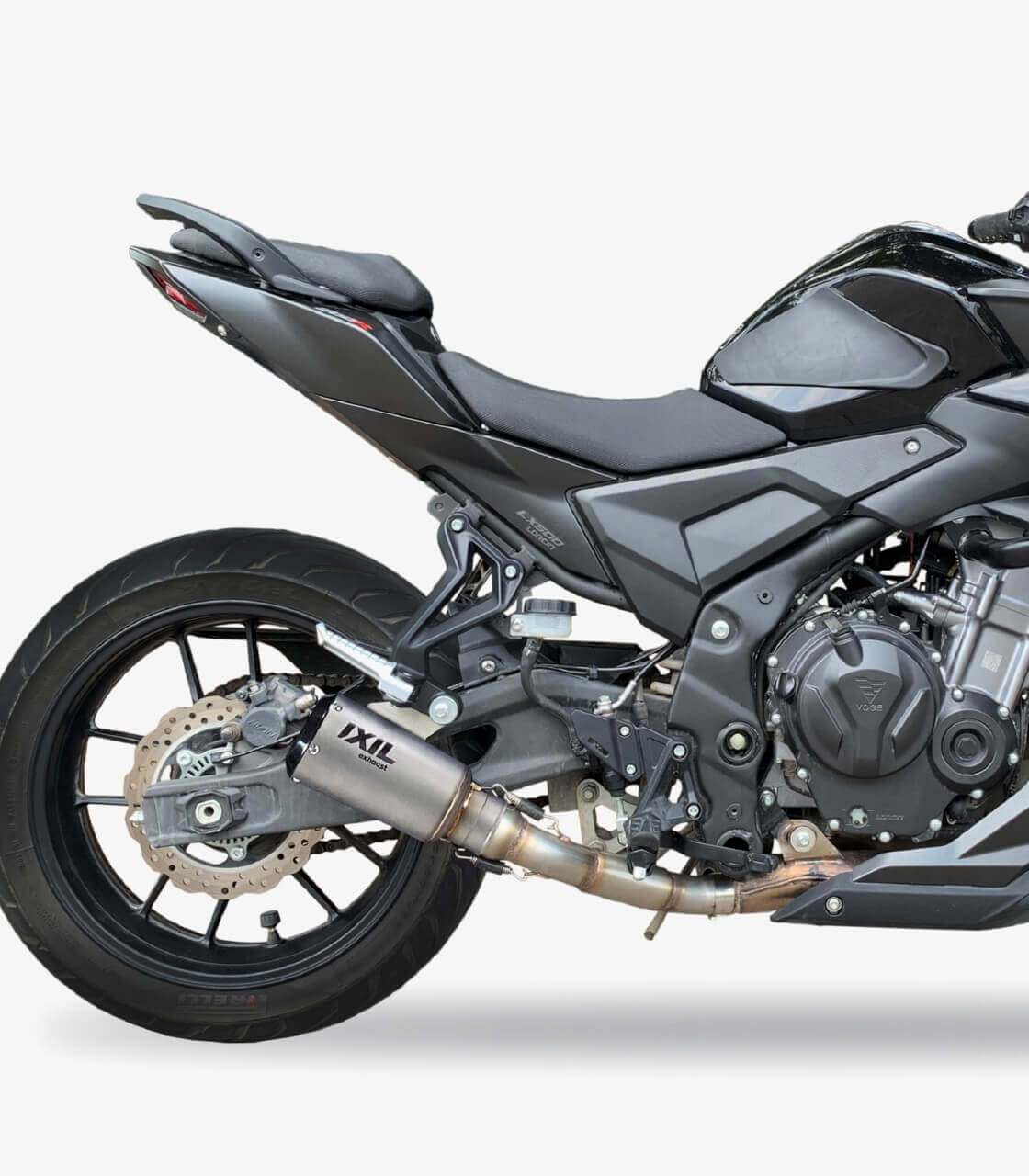
This guide explores the key differences between motorcycle exhaust system installation and new car exhaust fitting, focusing on the varying levels of complexity and the tools required for each. While motorcycle exhaust installation is often simpler, involving fewer specialized tools and easier clamping, both tasks demand precision to ensure a leak-free, properly fitted system. Car exhausts, however, present a more intricate challenge due to factors such as complex routing, catalytic converter integration, and the potential impact on oxygen sensors. Understanding these distinctions is crucial for successful installation in either application.
You may also refer to 機車引擎性能提升改裝方案:高效改裝秘訣與完整教學
- Tool Comparison: Motorcycle vs. Car Exhaust
- Exhaust System Complexity: A Comparison
- Exhaust Fitting: Key Differences
- DIY: Exhaust Installation Comparison
- Motorcycle exhaust system installation vs. new car exhaust fitting Conclusion
- Motorcycle exhaust system installation vs. new car exhaust fitting Quick FAQ
Tool Comparison: Motorcycle vs. Car Exhaust
One of the most significant differences between motorcycle and car exhaust installation lies in the tools required. Motorcycle exhaust systems, due to their simpler design and generally smaller scale, often require fewer specialized tools. A basic set including wrenches (sockets and open-ended), screwdrivers, and possibly a clamp for securing the system usually suffices. This makes motorcycle exhaust modifications more accessible to DIY enthusiasts. Car exhaust installation, however, is a different story. It often demands a more comprehensive toolkit.
Consider these key differences:
- Jacks and Jack Stands: Essential for safe car exhaust work, providing proper vehicle access, rarely needed for motorcycles.
- Exhaust Flange Wrenches: Frequently needed for cars to access hard-to-reach bolts on exhaust manifolds and connections; less frequently required for motorcycles.
- Welding Equipment: Sometimes necessary for car exhaust repair or fabrication, rarely needed for motorcycle exhaust work unless significant modification is undertaken.
- Torque Wrenches: Important for ensuring proper tightening of bolts and preventing leaks in both applications, but particularly crucial for the more complex car systems.
- Oxygen Sensor Socket: A specialized tool often required for cars to safely remove and install oxygen sensors without damaging them; not typically needed for motorcycles.
The increased complexity of car exhaust systems also means that specialized tools, beyond a typical home mechanic’s kit, are more frequently needed. This increased tool requirement contributes significantly to the higher perceived difficulty of car exhaust fitting compared to motorcycle exhaust installation.
Exhaust System Complexity: A Comparison
While both motorcycle and car exhaust system installations require careful attention to detail, the inherent complexity differs significantly. This impacts the tools needed, the time commitment, and the overall difficulty of the project for DIY enthusiasts. For example, a motorcycle exhaust typically involves a simpler, more straightforward process compared to a car’s exhaust system installation.
Here’s a breakdown of the key differences in complexity:
- Routing: Motorcycle exhaust systems generally follow a simpler, more direct path from the engine to the muffler. Car exhaust systems, however, often involve intricate routing around other components under the chassis, potentially requiring more maneuvering and specialized tools for proper fitment. This adds considerably to the overall complexity and time involved in car exhaust installation.
- Components: Cars often have multiple catalytic converters, oxygen sensors, and other emission control components integrated into the exhaust system. These add significant complexity, requiring careful attention during installation to avoid damage or improper positioning which could affect the vehicle’s emissions performance. Motorcycle exhaust systems tend to be much simpler in their design, minimizing the number of potentially problematic components and the associated challenges of correct installation.
- Clamping and Connections: While both systems use clamps, motorcycle exhausts frequently employ simpler clamping mechanisms, making installation quicker and easier. Car exhaust systems may involve more intricate connection points and specialized clamps, demanding additional precision and potentially specialized tools. Improper clamping can lead to leaks and, in the case of cars, emissions issues.
- Specialized Tools: While basic hand tools are sufficient for many motorcycle exhaust installations, car exhaust fitting often demands more specialized tools for tasks like cutting, bending, or precise alignment of components. This increases the upfront cost and skill level required for a successful car exhaust installation.
Understanding these differences is crucial for anyone undertaking a DIY exhaust project, regardless of whether it’s a motorcycle or car. Proper planning and preparation are essential to ensure a safe and successful outcome.
Exhaust Fitting: Key Differences
While both motorcycle and car exhaust fitting share the fundamental goal of securely attaching the exhaust system, several key differences significantly impact the process. Understanding these differences is crucial for a successful installation, minimizing the risk of leaks and ensuring optimal performance. For motorcycle exhaust fitting, simplicity is often a hallmark. Many systems utilize straightforward clamp-based connections, requiring fewer specialized tools and less intricate routing.
Conversely, car exhaust fitting frequently involves a more complex process.
Consider these factors:
- Catalytic Converter Integration: Car exhaust systems often include a catalytic converter, requiring careful consideration of its placement and connection points. This adds a layer of complexity absent in most motorcycle exhaust systems.
- Oxygen Sensor Interaction: The precise placement of oxygen sensors is critical for proper engine operation in cars. Incorrect fitting can lead to inaccurate readings and potential engine damage. Motorcycle systems rarely involve such sensors in this capacity.
- Intricate Routing: Car exhaust systems frequently involve complex bends and routes to accommodate chassis components and meet emission regulations. This intricate routing demands more precise measurements and often necessitates specialized tools for bending or manipulating exhaust pipes. Motorcycle systems, particularly on smaller bikes, tend to be more straightforward in their path.
Therefore, even though both involve securing exhaust components, the level of precision and technical expertise required differs significantly between car and motorcycle exhaust fitting.
“`html
| Feature | Motorcycle Exhaust Fitting | Car Exhaust Fitting |
|---|---|---|
| Connection Method | Simple, often clamp-based | More complex; various joining methods |
| Catalytic Converter | Typically absent | Usually integrated; requires careful placement and connection |
| Oxygen Sensors | Rarely involved | Critical for engine operation; precise placement is essential |
| Exhaust Routing | Generally straightforward | Often intricate, requiring precise measurements and specialized tools |
| Overall Complexity | Simple; fewer specialized tools needed | Complex; higher level of precision and technical expertise required |
| Key Characteristics | Simplicity | Level of precision and technical expertise |
“`
DIY: Exhaust Installation Comparison
Tackling a DIY exhaust installation, whether on a motorcycle or a car, requires careful planning and execution. This section offers a direct comparison to help you understand the differences involved in each process. Remember, safety is paramount; always consult your vehicle’s service manual and prioritize proper safety precautions.
Motorcycle Exhaust DIY: The relative simplicity of motorcycle exhaust systems often makes them ideal for DIY enthusiasts.
- Fewer components: Typically, fewer parts mean less time and fewer potential points of failure.
- Easier access: Motorcycle exhausts are generally more accessible, simplifying installation and troubleshooting.
- Simpler clamping: Clamps and fasteners are often easier to manage and require less specialized tooling.
However, even with motorcycles, ensuring a secure and leak-free connection is crucial to prevent harmful fumes and maintain optimal engine performance. Improper installation can lead to damage.
Car Exhaust DIY: Undertaking a car exhaust system replacement is significantly more challenging.
- Complex routing: Cars often have more intricate exhaust routing, requiring specialized tools and expertise to navigate tight spaces.
- Catalytic converter integration: The presence of a catalytic converter and its careful handling is a key consideration to avoid damage and legal issues.
- Oxygen sensor interaction: Oxygen sensor connections require precision and care to avoid errors in engine control and potential damage to the sensor.
- More components: The increased number of parts involved increases the probability of errors and the time needed for completion.
For car exhaust systems, seeking professional guidance or assistance is highly recommended, particularly for those unfamiliar with automotive repair procedures. A poorly installed car exhaust could result in serious problems.
Motorcycle exhaust system installation vs. new car exhaust fitting Conclusion
In conclusion, while both Motorcycle exhaust system installation and new car exhaust fitting share the common goal of a functional exhaust system, the processes differ significantly in complexity and required expertise. Motorcycle exhaust modifications often present a more manageable DIY project due to their simpler design, easier access, and less intricate routing. The tools required are typically more basic, making it a feasible undertaking for many enthusiasts with moderate mechanical skills. However, even in these simpler systems, attention to detail is critical to ensure a leak-free and properly functioning exhaust.
Conversely, car exhaust fitting presents a substantially more challenging proposition. The intricate routing, integration of emission control components (catalytic converters and oxygen sensors), and the potential for damage to these sensitive parts necessitate a higher level of mechanical skill and a more comprehensive toolkit. The potential consequences of improper installation are also far greater in cars, ranging from emission failures to engine damage. For those less experienced in automotive repair, professional assistance is strongly recommended.
Ultimately, the choice between tackling a DIY exhaust project or seeking professional help depends on your mechanical experience, the availability of tools, and the specific vehicle. This guide on Motorcycle exhaust system installation vs. new car exhaust fitting has aimed to equip you with the knowledge necessary to make an informed decision, ensuring a safe and successful outcome for your project, regardless of your chosen path.
Motorcycle exhaust system installation vs. new car exhaust fitting Quick FAQ
What are the biggest differences between installing a motorcycle exhaust and a car exhaust?
The main differences lie in complexity and the tools required. Motorcycle exhausts are generally simpler, with fewer components and a more straightforward routing. Installation often requires only basic hand tools. Car exhausts are significantly more complex, involving intricate routing, catalytic converters, oxygen sensors, and often requiring specialized tools like exhaust flange wrenches and oxygen sensor sockets. The level of precision needed is also much higher for car exhausts to ensure proper function and emission compliance.
Is it easier to install a motorcycle exhaust system myself than a car exhaust system?
Yes, generally, installing a motorcycle exhaust is a much easier DIY project than installing a car exhaust. Motorcycle exhausts tend to have fewer parts, simpler connections, and are more accessible. However, even with motorcycles, care must be taken to ensure a secure and leak-free installation. Car exhaust installation is considerably more challenging and often requires more specialized tools and knowledge. For car exhausts, professional installation is often recommended unless you have significant automotive experience.
What are the potential consequences of improperly installing either a motorcycle or car exhaust system?
Improper installation of either type of exhaust system can lead to several issues. These include exhaust leaks (resulting in harmful fumes entering the vehicle and potentially causing damage), reduced engine performance, and in the case of cars, failure to meet emission standards. In cars, improper oxygen sensor placement can cause engine misfires or damage the sensor itself. For both motorcycles and cars, safety is paramount; a poorly installed exhaust system is a significant safety hazard.