This article investigates the effectiveness of catalytic converters in meeting emission standards for both motorcycles and cars. A key focus is comparing the functionality and efficiency of motorcycle exhaust system catalytic converters versus new car emission controls. While both utilize similar chemical processes to reduce pollutants like carbon monoxide, hydrocarbons, and nitrogen oxides, significant differences arise due to the constraints of size and weight in motorcycle design. We will explore how these limitations impact the design and ultimately the performance of motorcycle catalytic converters compared to their automotive counterparts.
You may also refer to 機車座墊更換與保養技巧:舒適騎乘的秘訣與完整教學
- Catalyst Efficiency: A Direct Comparison
- Emission Standards: A Head-to-Head
- Design Differences: Motorcycle vs. Car
- Future Trends: Exhaust Tech Compared
- Motorcycle exhaust system catalytic converters vs. new car emission controls Conclusion
- Motorcycle exhaust system catalytic converters vs. new car emission controls Quick FAQ
Catalyst Efficiency: A Direct Comparison
While both motorcycle and car catalytic converters aim to reduce harmful emissions, their efficiency in achieving this goal varies significantly. This difference stems from several factors, primarily the size and design constraints inherent in motorcycle exhaust systems. Cars, with their larger engine bays and exhaust routing options, allow for larger, more complex catalytic converters. These larger converters provide a greater surface area for the catalytic reaction to occur, leading to higher conversion rates of pollutants like carbon monoxide (CO), hydrocarbons (HC), and nitrogen oxides (NOx). This translates to a more efficient reduction of these harmful emissions in cars compared to motorcycles.
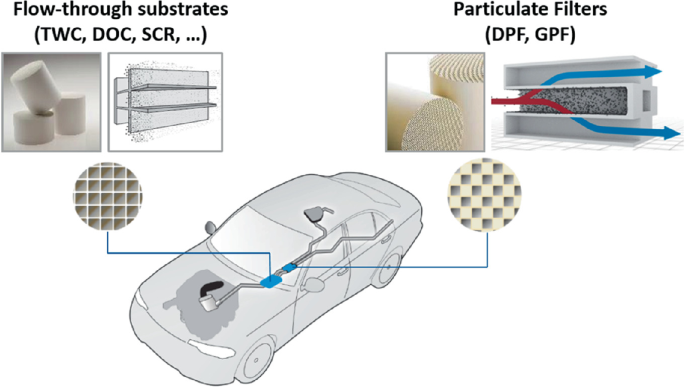
Consider the catalyst substrate itself. Car converters often utilize a honeycomb structure with a larger surface area, allowing for more efficient contact between exhaust gases and the precious metal catalysts (platinum, palladium, rhodium). Motorcycle converters, due to size restrictions, may use a less elaborate substrate, potentially compromising their efficiency. The flow dynamics within the converter also impact efficiency. Cars, with their larger converters, experience less restrictive exhaust gas flow, which contributes to better catalyst utilization. Motorcycle systems, however, often face more constrained flow, potentially leading to less complete conversion of pollutants.
Furthermore, the operating temperatures are crucial for optimal catalyst performance. Both systems require sufficient heat to initiate and maintain the catalytic reactions. However, motorcycles, particularly smaller-engine models, may not always reach the optimal temperature range as consistently as cars, leading to potentially lower conversion efficiencies at various engine speeds and loads. This difference directly relates to their overall emissions. The impact on air quality is consequently greater with less efficient motorcycle converters, even if improvements are consistently made.
- Larger surface area in car catalytic converters generally leads to higher efficiency.
- Motorcycle converters often face limitations in size and substrate design impacting their efficiency.
- Exhaust gas flow dynamics and operating temperatures also play a significant role in the efficiency difference.
Emission Standards: A Head-to-Head
Meeting emission standards presents unique challenges for motorcycle and car catalytic converters. While both vehicle types aim to reduce pollutants like carbon monoxide (CO), hydrocarbons (HC), and nitrogen oxides (NOx), the regulatory landscape and the resulting technological solutions differ significantly.
Let’s consider the key differences:
- Stringency of Regulations: Car emission standards are generally more stringent than those for motorcycles, reflecting the higher volume of pollutants produced by the larger vehicle population. Cars face more rigorous testing and stricter limits on allowable emissions, driving the development of more sophisticated catalytic converter technology.
- Testing Procedures: The way emissions are measured and regulated also varies. Cars undergo more comprehensive testing cycles, simulating diverse driving conditions and encompassing more parameters than motorcycle emission tests. This pushes car manufacturers to create converters that perform consistently under a wider range of operating parameters.
- Weight and Size Constraints: The compact nature of motorcycles severely restricts the size and weight of their exhaust systems, including the catalytic converter. This constraint limits the amount of catalytic material that can be used, directly impacting the converter’s efficiency in achieving low emission levels. Car manufacturers enjoy significantly more design freedom in this area.
- Technological Advancements: The pursuit of stricter emission standards has spurred advancements in both motorcycle and car catalytic converter technologies. However, the pace of innovation and the complexity of solutions tend to be higher in the automotive sector due to the more demanding regulations and the greater scale of production.
Understanding these variations in emission standards and their impact on design is crucial for appreciating the differences in catalytic converter performance and the ongoing efforts to improve air quality across all vehicle types.
Design Differences: Motorcycle vs. Car
While both motorcycle and car catalytic converters share the fundamental goal of reducing harmful emissions, significant design differences stem from the contrasting demands of their respective applications. Cars, generally possessing larger engine bays and more space for exhaust components, can accommodate larger and more complex catalytic converters. This allows for greater surface area within the converter, promoting more efficient pollutant conversion.
Conversely, motorcycles are constrained by size and weight limitations. This leads to the use of smaller, often more compact, catalytic converters. These smaller units may struggle to achieve the same level of efficiency as their car counterparts, particularly at lower engine speeds where the exhaust gas flow is less turbulent.
- Packaging Constraints: Motorcycle converters are often shaped to fit within the limited space available under the motorcycle chassis, influencing the internal structure and flow dynamics.
- Weight Considerations: The need to minimize weight for optimal motorcycle performance dictates the use of lighter, sometimes less robust, materials in motorcycle catalytic converters.
- Heat Management: The close proximity of the catalytic converter to other components in a motorcycle engine compartment can create unique heat management challenges, impacting converter longevity and efficiency.
- Flow Dynamics: The smaller size and different exhaust routing in motorcycles can affect the flow of exhaust gases through the converter, possibly reducing the overall efficiency of pollutant conversion compared to cars.
These design differences highlight the engineering trade-offs involved in optimizing both emission control and vehicle performance in different vehicle classes. The continuing development of advanced materials and compact converter designs aims to mitigate these differences, bringing the emission control capabilities of motorcycles closer to that of cars.
“`html
| Feature | Car | Motorcycle |
|---|---|---|
| Size & Complexity | Larger, more complex; greater surface area for efficient conversion. | Smaller, more compact; potentially less efficient, especially at lower speeds. |
| Packaging Constraints | Larger engine bay allows for flexible placement. | Shaped to fit limited space under chassis, impacting internal structure and flow. |
| Weight Considerations | Weight less critical. | Use of lighter, potentially less robust materials to minimize weight. |
| Heat Management | Generally less constrained. | Close proximity to other components creates challenges impacting longevity and efficiency. |
| Flow Dynamics | Efficient exhaust gas flow due to larger size and design. | Smaller size and different exhaust routing can reduce efficiency of pollutant conversion. |
“`
Future Trends: Exhaust Tech Compared
The future of exhaust emission control in both motorcycles and cars points towards increasingly sophisticated and integrated systems. For cars, we’re likely to see a continued push towards electric vehicles, drastically reducing reliance on catalytic converters altogether. However, for motorcycles, where electrification is progressing more slowly due to factors like battery weight and range limitations, advancements in catalytic converter technology will remain crucial.
Several key trends are shaping the future landscape:
- Smaller, More Efficient Catalysts: Research focuses on creating catalytic converters with higher surface area-to-volume ratios, enabling superior performance within the tight confines of a motorcycle exhaust. This includes exploring novel materials and manufacturing techniques.
- Integrated Systems: Combining the catalytic converter with other exhaust components, such as mufflers or oxygen sensors, into a single, streamlined unit will improve efficiency and reduce weight. This is already becoming more prevalent in car exhaust systems and will increasingly find its way into motorcycle designs.
- Advanced Sensor Technology: More precise and responsive oxygen sensors, combined with sophisticated engine management systems, will allow for optimal catalyst operation across varying riding conditions and engine loads. This real-time feedback loop will contribute to significantly improved emission control.
- Alternative Catalysts: Exploration of new catalyst materials beyond the traditional platinum-group metals could lead to more cost-effective and potentially more efficient emission control, addressing concerns about resource scarcity and cost. This research is relevant to both cars and motorcycles.
- Hybrid and Electric Motorcycle Integration: Even with the rise of electric motorcycles, hybrid designs are expected. Improved catalytic converter efficiency and smaller sizes will be critical for managing emissions during combustion engine operation in hybrid systems.
These advancements promise cleaner air and continued progress towards stricter emission regulations, regardless of the power source.
Motorcycle exhaust system catalytic converters vs. new car emission controls Conclusion
This comparison of Motorcycle exhaust system catalytic converters vs. new car emission controls reveals significant differences driven primarily by the contrasting design constraints of motorcycles and cars. While both utilize catalytic converters to mitigate harmful emissions, the smaller size and weight limitations inherent in motorcycle designs lead to less efficient systems compared to their automotive counterparts. Cars, benefiting from larger engine bays and less restrictive packaging, can accommodate larger, more sophisticated converters with greater surface areas and improved flow dynamics, resulting in higher conversion rates of pollutants.
The stringency of emission regulations further exacerbates these differences. Cars face stricter standards and more rigorous testing procedures, pushing technological advancements in converter design and efficiency. Motorcycles, while subject to increasingly stringent regulations, lag behind in technological sophistication due to the size and weight restrictions. This difference underscores the ongoing engineering challenge of balancing emission control with the performance requirements of motorcycles.
However, the future holds promise for advancements that could bridge this performance gap. Research into smaller, more efficient catalysts, integrated exhaust systems, and advanced sensor technologies is paving the way for significant improvements in motorcycle emission control. The exploration of alternative catalyst materials also offers potential for increased efficiency and reduced cost. As technology continues to evolve, we can anticipate a convergence of emission control capabilities between motorcycles and cars, ultimately contributing to cleaner air for everyone.
Ultimately, understanding the nuances of Motorcycle exhaust system catalytic converters vs. new car emission controls is essential for appreciating the ongoing efforts to reduce vehicular emissions and improve air quality. The continued development and refinement of catalytic converter technology, coupled with the emergence of electric and hybrid vehicles, present a path toward a more sustainable future for all vehicle types.
Motorcycle exhaust system catalytic converters vs. new car emission controls Quick FAQ
Are motorcycle catalytic converters as efficient as those in cars?
Generally, no. Car catalytic converters are typically larger and more sophisticated due to less stringent size and weight constraints. This allows for a greater surface area for the catalytic reaction, leading to higher efficiency in reducing pollutants. Motorcycle converters, constrained by size and weight, often have lower conversion rates, especially at lower engine speeds.
What are the key differences in emission standards between motorcycles and cars?
Car emission standards are usually stricter than those for motorcycles. Cars undergo more comprehensive testing, simulating various driving conditions and measuring more parameters. The stricter regulations for cars drive innovation in catalytic converter technology more aggressively than in the motorcycle sector.
What future trends will affect the efficiency of both motorcycle and car catalytic converters?
Both sectors are seeing advancements. Cars are trending toward electrification, minimizing reliance on catalytic converters. For motorcycles, future trends include smaller, more efficient catalysts; integrated systems combining multiple components; advanced sensor technology for optimal operation; and exploration of alternative catalyst materials. Hybrid motorcycle designs will also continue to need efficient, compact converters.