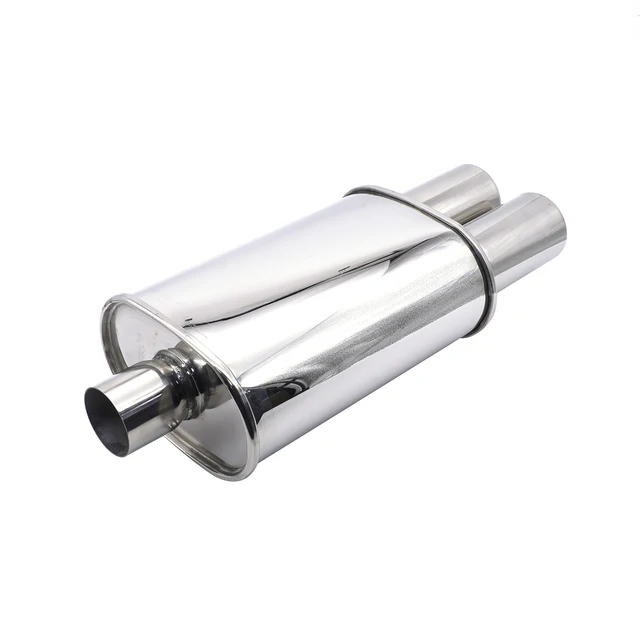
Optimizing engine performance requires distinct approaches depending on the vehicle and desired outcome. The fundamental difference between motorcycle exhaust headers for torque vs. new car exhaust tuning for power lies in their design goals. Motorcycle header design prioritizes low-end torque through carefully engineered scavenging effects, whereas car exhaust tuning aims to maximize high-rpm horsepower by precisely managing backpressure and scavenging across the entire rev range. This distinction necessitates fundamentally different design strategies, as we will explore.
You may also refer to Motorcycle Exhaust System Installation vs. New Car Exhaust Fitting: A How-To Guide
- Header Design: Bikes vs. Cars
- Scavenging: Torque vs. Power
- Exhaust Tuning: Distinct Approaches
- Tuning Strategies: Bikes vs. Cars
- Motorcycle exhaust headers for torque vs. new car exhaust tuning for power Conclusion
- Motorcycle exhaust headers for torque vs. new car exhaust tuning for power Quick FAQ
Header Design: Bikes vs. Cars
The fundamental difference in performance goals between motorcycles and cars dramatically impacts exhaust header design. Motorcycle exhaust header design, prioritizing low-end torque crucial for quick acceleration and maneuverability, emphasizes optimized scavenging at lower RPMs. This means the header’s geometry is meticulously crafted to efficiently extract spent gases, creating a pressure wave that helps pull in the fresh charge. In contrast, car exhaust tuning, often aiming for peak horsepower at higher engine speeds, requires a different approach. The design focus shifts towards carefully managing backpressure throughout the entire rev range to maximize power output.
This distinction is further highlighted by the following key differences:
- Motorcycle headers often feature shorter lengths and larger diameter tubing in specific sections to maximize low-end torque. The goal is to create strong scavenging effects at lower RPM, critical for a quick response from the throttle.
- Car exhaust systems frequently incorporate longer headers with varied diameters, designed to fine-tune backpressure across a wider RPM range. This allows for the precise balancing of scavenging effects to maximize power throughout the rev band, rather than focusing solely on low-end response.
- The geometry of motorcycle headers often prioritizes a more direct path for exhaust gases, minimizing restriction. The smooth flow of gas is crucial in maximizing engine efficiency at the lower RPM needed for typical motorcycle use.
- Car header design often incorporates more complex designs such as equal length headers or stepped headers, designed to carefully manipulate exhaust gas flow and backpressure at various RPMs to maximize power across a broader range. These designs are often optimized through computational fluid dynamics (CFD) simulations.
Understanding these contrasting design philosophies is vital for anyone seeking to modify their vehicle’s exhaust system for optimal performance. Ignoring these differences can lead to disappointing results, hindering rather than enhancing engine performance.
Scavenging: Torque vs. Power
The principle of scavenging, the efficient removal of exhaust gases from the cylinders to make way for the fresh intake charge, is fundamental to both motorcycle and car exhaust system design, but its application differs significantly depending on the desired performance characteristics. This is where the divergence in design philosophies truly becomes apparent.
For motorcycles, the focus is almost exclusively on low-end torque. Effective scavenging in a motorcycle exhaust system is achieved through:
- Optimized header primary tube lengths and diameters: Carefully designed to create pressure waves that help clear exhaust gases from the cylinders, maximizing low-rpm power delivery crucial for acceleration and maneuverability.
- Short header length: Minimizing the distance exhaust gases travel, reducing the overall inertia and leading to quicker cylinder clearing at lower engine speeds. This contributes significantly to improved low-end torque.
- Strategic collector design: The collector’s design plays a vital role in combining the exhaust pulses from the individual cylinders in a way that enhances the scavenging effect at low RPMs, further boosting torque output.
In contrast, car exhaust systems often prioritize high-rpm horsepower. This requires a more nuanced approach to scavenging:
- Longer header primary tubes: This allows for precise manipulation of exhaust pulses to create pressure waves that enhance scavenging at higher engine speeds.
- Careful backpressure management: While excessive backpressure is detrimental, a strategically controlled amount can actually enhance cylinder filling efficiency at high RPMs, boosting power output within the higher rev range. This is significantly different from the motorcycle design goal.
- Complex collector designs: The collector design becomes more intricate, aimed at managing exhaust gas pulses to maximize scavenging across a wider RPM range, extending the powerband significantly further than a motorcycle exhaust system.
The fundamental difference lies in the operational range. Motorcycles need strong low-end torque for immediate acceleration and responsiveness, while cars often benefit from broad power delivery and high-rpm horsepower for higher overall speeds and passing power.
Exhaust Tuning: Distinct Approaches
The fundamental differences in design goals between motorcycle and car exhaust systems lead to dramatically different tuning strategies. Motorcycle exhaust tuning, primarily focused on low-end torque enhancement, often employs shorter, larger-diameter headers to optimize scavenging at lower RPMs. This prioritizes quick engine response and strong acceleration from a standstill, crucial for nimble handling and everyday riding. In contrast, car exhaust tuning for optimal high-rpm horsepower demands a more intricate approach. This involves carefully balancing backpressure and scavenging across the entire rev range. The goal is to maximize power output at higher engine speeds, a key factor in achieving top speed and high-performance driving.
Consider these key distinctions:
- Motorcycle Exhaust: Emphasis on rapid scavenging at lower RPMs to boost low-end torque and throttle response. This translates to a more immediate and powerful feeling, particularly beneficial in urban environments or winding roads.
- Car Exhaust: Focus on maximizing power at higher RPMs through precise management of exhaust gas flow and backpressure. This results in a more potent top-end powerband, vital for high-speed runs and track performance.
Therefore, a “one-size-fits-all” approach to exhaust tuning is simply not effective. The specific needs of the vehicle, whether it’s the nimble responsiveness of a motorcycle or the high-speed power of a car, must always dictate the exhaust system design and tuning strategy.
“`html
| Feature | Motorcycle Exhaust Tuning | Car Exhaust Tuning |
|---|---|---|
| Primary Goal | Low-end torque enhancement; rapid acceleration | High-rpm horsepower maximization; top speed |
| Design Approach | Shorter, larger-diameter headers; optimized scavenging at lower RPMs | Careful balancing of backpressure and scavenging across the entire rev range |
| Performance Focus | Quick engine response, strong low-end acceleration | Potent high-end powerband, high-speed performance |
| Ideal Application | Urban environments, winding roads | High-speed runs, track performance |
“`
Tuning Strategies: Bikes vs. Cars
The fundamental differences in design goals between motorcycle and car exhaust systems lead to vastly different tuning strategies. For motorcycles, the focus is almost always on enhancing low-end torque, making the bike more responsive and easier to ride, especially in city traffic. This requires tuning strategies that prioritize efficient scavenging at lower RPMs.
Conversely, car exhaust tuning often prioritizes high-rpm horsepower. This is because many car enthusiasts crave high-speed performance and the thrill of higher engine speeds. Achieving this necessitates a different approach, carefully managing backpressure across a broader RPM range to optimize power delivery in the upper rev band. Think of it this way: a motorcycle needs strong, immediate pull from a standstill, while a car might emphasize a strong surge of power when overtaking at high speed.
Let’s examine specific strategies:
- Motorcycle Tuning: Often involves optimizing header primary tube lengths and diameters to create a pulse effect that improves scavenging at lower RPMs. This results in stronger, more immediate torque. Modifications might include aftermarket headers designed for specific engine displacements and riding styles.
- Car Tuning: Frequently focuses on meticulously adjusting backpressure through the exhaust system using components like catalytic converters, mufflers, and exhaust manifolds. The goal is to maximize power across a wider RPM range, sometimes at the expense of some low-end torque. This can involve sophisticated tuning software and dyno testing to refine the system.
Ultimately, understanding these distinct tuning approaches is key to achieving the desired performance characteristics, whether you’re building a powerful streetfighter motorcycle or a high-performance sports car. The optimal tuning strategy is inextricably linked to the intended use and performance goals of the vehicle.
Motorcycle exhaust headers for torque vs. new car exhaust tuning for power Conclusion
In conclusion, the quest for optimal engine performance reveals a fascinating dichotomy between motorcycle and car exhaust system design. Motorcycle exhaust headers for torque vs. new car exhaust tuning for power highlights this critical difference. While both leverage the principle of scavenging to enhance engine efficiency, their implementation and goals diverge significantly. Motorcycles prioritize low-end torque for immediate acceleration and responsiveness, necessitating shorter headers with larger diameters to optimize scavenging at lower RPMs. This results in a powerful, immediate feel, perfect for urban riding and maneuvering.
Conversely, car exhaust tuning often focuses on maximizing high-rpm horsepower, demanding a more intricate approach. Longer headers, carefully managed backpressure, and complex collector designs are employed to fine-tune scavenging across the entire rev range, maximizing power at higher engine speeds. This contributes to the exhilarating high-speed performance and overtaking capabilities often sought after in high-performance cars.
Therefore, understanding these fundamental differences is paramount for anyone seeking to enhance their vehicle’s performance through exhaust modifications. A “one-size-fits-all” approach is simply ineffective. The specific requirements of the vehicle – be it the immediate punch of a motorcycle or the sustained power of a car – must dictate the chosen design and tuning strategy. Only through a deep understanding of the underlying principles of scavenging, backpressure management, and the unique demands of each vehicle type can enthusiasts unlock the true potential of their engine’s performance. Choosing the right exhaust system is about more than just sound; it’s about aligning design and tuning with the intended driving experience.
Motorcycle exhaust headers for torque vs. new car exhaust tuning for power Quick FAQ
What is the fundamental difference between motorcycle exhaust header design and car exhaust tuning?
The core difference lies in the performance goals. Motorcycle header design prioritizes low-end torque for quick acceleration and maneuverability, achieved through optimized scavenging at lower RPMs. Car exhaust tuning aims to maximize high-rpm horsepower by carefully managing backpressure and scavenging across the entire rev range. These distinct goals necessitate fundamentally different design approaches.
How does scavenging affect torque and horsepower in motorcycles and cars?
Scavenging, the efficient removal of exhaust gases, is crucial in both. In motorcycles, it’s optimized at lower RPMs through shorter headers and larger diameter tubing to enhance low-end torque. In cars, a more nuanced approach manages scavenging across a wider RPM range using longer headers and varied diameters to maximize horsepower at higher engine speeds. The car’s design often incorporates backpressure management to fine-tune power at higher RPMs, something generally avoided in motorcycle design.
What are the key differences in tuning strategies for motorcycle and car exhaust systems?
Motorcycle exhaust tuning focuses on enhancing low-end torque by optimizing scavenging at lower RPMs, often through modifications to header length and diameter. Car exhaust tuning aims to maximize high-rpm horsepower, usually involving precise backpressure management across a broader RPM range through components like catalytic converters and mufflers, sometimes requiring sophisticated tuning software and dyno testing.